Wednesday · 16 September 2026 Vol. 04 · Issue No. 38 SGD 9.50 · USD 7.10

Merlion Ledger

Tech · Digital Assets · Cross-Border Capital
LIVE MAS launches FSTI 4.0 with S$220M over three years DBS · OCBC · UOB settle first joint tokenised-deposit payment on Swift ledger Singapore named world's most crypto-friendly city, 2026 index Gemini secures MAS Major Payment Institution licence Circle acquires cross-border platform Tazapay SEA blockchain funding: Singapore captures 82.5% of regional flows LIVE MAS launches FSTI 4.0 with S$220M over three years DBS · OCBC · UOB settle first joint tokenised-deposit payment on Swift ledger Singapore named world's most crypto-friendly city, 2026 index Gemini secures MAS Major Payment Institution licence Circle acquires cross-border platform Tazapay SEA blockchain funding: Singapore captures 82.5% of regional flows
Cover Story · September 2026

The Lion City's Ledger Moment

A S$220 million innovation war-chest, three global banks settling on a shared blockchain ledger, and a stablecoin framework entering its final reading — Singapore is quietly building the operating system for the world's tokenised capital. Inside the policy, the pilots and the people wiring the city-state for the on-chain economy.

Singapore Marina Bay skyline at night Marina Bay, Singapore — the control tower of Asia's on-chain economy
S$220MFSTI 4.0 innovation funding · 2026–2029
No.1Global crypto-friendly city index 2026
82.5%Share of SEA blockchain venture funding
No. 01

The Big Story

Policy & Capital
Exclusive Briefing Monetary Authority of Singapore 31 Aug 2026

S$220 Million, Three Years, One Signal: MAS Doubles Down on the Institutional On-Chain Future

The fourth edition of the Financial Sector Technology and Innovation Scheme is the city-state's clearest statement yet that blockchain infrastructure is no longer an experiment — it is national financial infrastructure.

When the Monetary Authority of Singapore (MAS) unveiled the Financial Sector Technology and Innovation Scheme 4.0 — FSTI 4.0 — at the close of August, the number that travelled around the region's trading floors was S$220 million. But the number that matters more is the one buried in the fine print: the scheme explicitly co-funds the "first institutional deployment" of distributed ledger technology, quantum-safe cryptography and scaled-up artificial intelligence. In plain language, Singapore is paying to de-risk the exact moment when a bank, an exchange or a fund goes live on-chain for the first time.

The structure of FSTI 4.0 reads like a venture capitalist's wish list written by a central bank. An enhanced Accelerator track provides Scale-up Grants for fintech headquarters anchoring in Singapore. A dedicated Innovation track targets institutional-grade deployments of blockchain rails. And the whole scheme is deliberately open to foreign-headquartered firms — provided the deployment lands in Singapore. Officials describe it as "attracting private capital to public infrastructure goals"; bankers describe it more simply as the green light they have been waiting for.

The timing is not accidental. Within the same fortnight, MAS pushed its stablecoin framework into the final stage of legislative consultation, confirmed full-scale pilots settling tokenised government bills with wholesale central bank digital currency, and watched three of its largest banks complete a world-first joint settlement. Taken together, the message to global capital is unusually coherent for a regulator: the rails are funded, the rules are written, and the pilots have already run.
S$220Mco-funding pool, FY2026–2029
3 tracksAI · DLT · quantum technologies
First-deploygrants de-risk institutional go-live
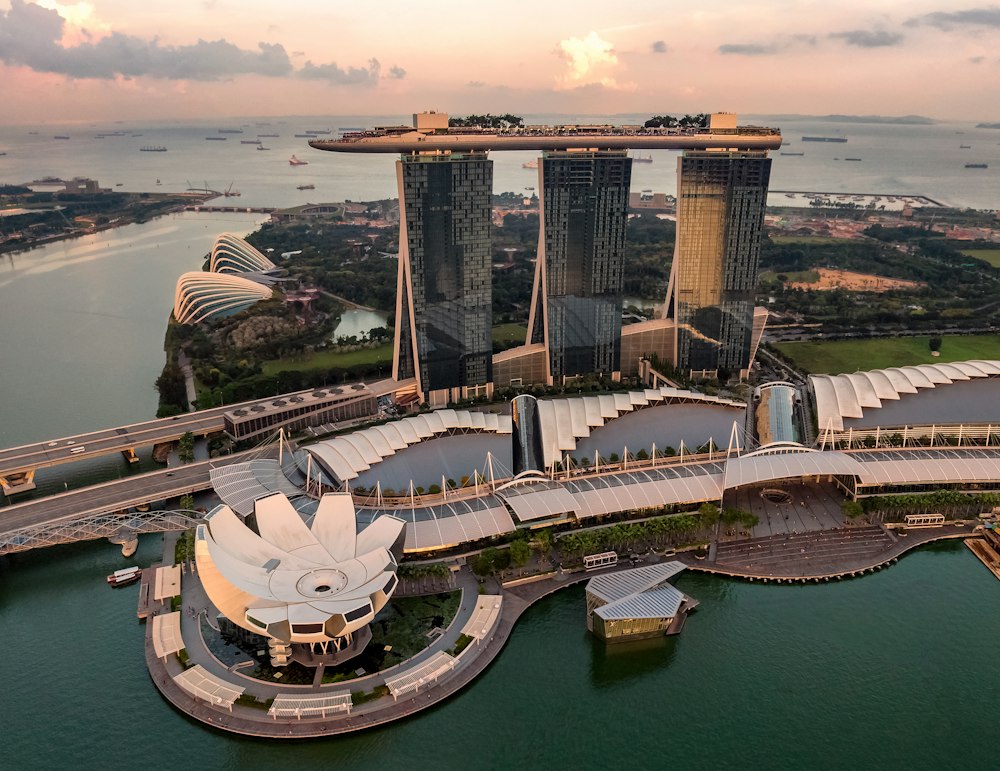
Marina Bay skyline, Singapore financial district Marina Bay — where the S$220M signal was sent to global capital

No. 02

The Numbers Desk

Market Indicators
FSTI 4.0 Pool S$220M Three-year co-funding for AI, DLT and quantum deployment. New · Aug 2026
Crypto-Friendly Rank #1/global Multipolitan 2026 index — ahead of London and New York. Up from #3
Stablecoin Consultation Finalreading MAS-SCS framework closes public consultation 16 Oct 2026. In progress
Custody Insurance Rule ≥50% Minimum insured share of client assets under upgraded MAS custody rules. In force

Figures compiled from MAS announcements, Multipolitan 2026 index, Swift/DBS disclosures and regional venture data · Editorial compilation, September 2026.

No. 03

Where Three Banks Met One Ledger

Deep Dive · Banking

DBS, OCBC and UOB Just Proved the Interbank Night Shift Is Over

On a shared Swift blockchain ledger, Singapore's big three settled live tokenised-deposit payments — the quiet beginning of a 24/7 interbank market.

For half a century, the rhythm of international banking has been set by closing times. A payment initiated after dusk in one time zone waited for dawn in another. In September 2026, that rhythm broke. DBS Bank, OCBC and United Overseas Bank jointly executed Singapore's first interbank settlement of tokenised deposits — bank money represented on a distributed ledger — running over Swift's blockchain-based infrastructure, the same shared ledger that earlier carried the dollar-leg pilots between DBS, OCBC and Citi.

The mechanics matter less than the precedent. Tokenised deposits are not cryptocurrency; they are ordinary commercial-bank money in programmable form, each unit a claim on the issuing bank. What changed is that the three banks demonstrated such claims can move between competing institutions, across currencies and time zones, at software speed — with the settlement logic enforced by smart contracts rather than by the overnight batching cycle of correspondent banking.

DBS goes further in its public commentary: within two to three years, it expects institutional spending on tokenised-finance infrastructure to catch up with — and potentially overtake — what banks spend on traditional payments and custody. If that forecast lands, the ledger Singapore's banks just tested becomes not a side project but the main line.

"Cross-market, cross-currency, cross-time-zone money movement — without waiting for anyone's morning."

— The September settlement, in one sentence
DBS TOKENISED SGD OCBC TOKENISED SGD UOB TOKENISED SGD SWIFT Blockchain Ledger SHARED · PROGRAMMABLE · ALWAYS ON first joint interbank settlement · Sep 2026 T+0 · seconds · finality guaranteed

Programmable bank deposits move directly between the big three on a shared distributed ledger, with Swift providing the interbank spine. The same rails carried earlier USD pilots with Citi.

No. 04

Dispatches from the Wire

Six Stories · One City
Cryptocurrency coins on a trading screen backdrop
Licensing
Gemini Goes Full-Stack: MPI Licence Unlocks Unlimited-Volume Rails

With the Major Payment Institution licence in hand, Gemini's Singapore entity can offer digital payment token services without volume caps — and is now steering hard into institutional custody and OTC trading. Local clients are being migrated onto the licensed Singapore entity, with segregated wallets and the mandated 50%+ custody insurance now standard.

4 min read · RegulationEditor's pick
Secure vault padlock symbolising segregated custody
Custody
The New Custody Rulebook: Segregation and Insurance by Statute

MAS's upgraded custody framework now hard-codes what used to be best practice: mandatory client-asset segregation in isolated wallets and insurance covering at least half of assets under custody. For sovereign funds and family offices weighing the region, it converts "trust us" into "audit us" — the single most consequential rule change for large-ticket capital this year.

5 min read · PolicyIn depth
Contactless card payment representing cross-border money flow
M&A
Circle Buys Tazapay: Sixty Partners and 100+ Markets Fold Into One Rail

The USDC issuer's acquisition of Singapore-headquartered Tazapay folds more than sixty bank and fintech partners — and payout coverage across over one hundred emerging markets — into a single stablecoin-native corridor. It is the clearest signal yet that global payment groups see Singapore as the control tower for Southeast Asian money flow.

4 min read · Cross-borderDeal watch
Scales of justice representing financial legislation
Legislation
Stablecoin Bill Enters Final Consultation — With a Door Open to Foreign Coins

The MAS-SCS framework's closing consultation (until 16 October) does three things at once: it grants compliant single-currency stablecoins "reputable settlement asset" status, sets 100% reserve and at-par redemption rights, and carves a recognition path for foreign stablecoins under equivalent supervision. Hong Kong, European and Gulf-issued coins could clear Singapore trade corridors without a detour through SGD conversion.

6 min read · RegulationBriefing
Server room representing central bank digital infrastructure
Central Banking
Wholesale CBDC Meets Tokenised Government Paper

Building on Project Guardian, MAS has moved wholesale central bank digital currency from whitepaper to full pilot: settling tokenised bills and bonds on-chain with official liquidity. The effect for cross-border funds buying Singapore digital paper is elimination of the classic DvP timing gap — cash and security change hands in the same block, at T+0.

5 min read · InfrastructureExplainer
Gaming setup representing the Web3 games studio scene
Gaming × RWA
Web3 Gaming Grows Up: From Play-to-Earn to "Web2.5" Yield Hooks

With compliant on/off-ramps and custody now standard, Singapore's gaming studios are linking in-game assets to real-world yield — tokenised treasuries and supply-chain paper — replacing the pure speculation loop of the last cycle. The Global-Asia Digital Grant subsidises exactly this: programmable asset issuance with a revenue model that survives contact with regulators.

4 min read · CultureTrend
No. 05

The Gravity Report

Infrastructure · Custody · New Rails

2,285 Companies Chose One City: The Numbers Behind Southeast Asia's Blockchain Gravity

Fresh industry data from CFOTech Asia puts a hard figure on what bankers have been saying anecdotally all year — when regional Web3 firms decide where to incorporate, there is effectively one candidate.

Strip away the conference keynotes and the whitepapers, and the regional contest for blockchain supremacy was settled by a spreadsheet. According to the latest industry tracking published by CFOTech Asia in September 2026, Singapore captured 82.5% of all blockchain-sector financing across Southeast Asia — not a plurality, but a near-total share of every venture dollar, corporate allocation and grant that flowed into the region's on-chain economy.

The company count tells the same story from a different angle. Of the 3,957 blockchain infrastructure and Web3 enterprises tracked across the region, 2,285 are registered in Singapore — a density of founders, engineers, compliance officers and market makers that no neighbouring capital can approach. Jakarta, Bangkok and Kuala Lumpur each retain vibrant local scenes; none has assembled the full stack of licensing clarity, banking access, talent depth and treaty network that turns a startup into a regional headquarters.

The pattern intensified visibly over the past few months. Founders describe a pull that is less about tax and more about "completeness": a stablecoin issuer can obtain a bank account, a custody partner, an audited reserve attestation and a regulatory conversation in the same business district. That proximity effect — the ability to fly every counterparty in for one afternoon of meetings — is precisely the cross-border siphon that regional rivals are now struggling to replicate.

"Capital follows certainty. This year, certainty speaks with a Singapore accent."

— Regional venture briefing, September 2026
SHARE OF SEA BLOCKCHAIN FINANCING · 2026 SINGAPORE 82.5% REST OF SEA 17.5% — split across Jakarta · Bangkok · KL 2,285 of 3,957 tracked regional Web3 firms are Singapore-registered Source: CFOTech Asia industry data report · Sep 2026
82.5%regional blockchain financing captured
2,285of 3,957 tracked firms locally registered
No.1hub ahead of Jakarta · Bangkok · KL

Custody Grows Up: The Standalone Licence and the S$1,500 Travel Rule

Two regulatory moves this quarter quietly rebuilt the plumbing between traditional private banking and digital assets.

The first is structural. In its revised supervisory outline, MAS confirmed that digital asset custody will be licensed as a standalone regulated activity, fully separated from the digital payment token (DPT) regime. Custody specialists — including overseas trust companies and financial institutions that exist purely to hold keys — no longer need to bend themselves into a payments-shaped licence. The compliance path for a foreign custodian entering Singapore is now a straight line instead of a maze.

The second is procedural, and it bites harder than it reads. From the second half of 2026, the FATF Travel Rule applies in full to any digital asset transfer of S$1,500 or more: the sending and receiving custodians must verify counterparty identity and address in real time, in seconds, before value moves. Meeting the bar means wiring compliance APIs such as Notabene directly into settlement flows — a genuine technical hurdle, and one deliberately designed to filter out operators who cannot rise to it.

The consequence is paradoxical and profound: by making digital-asset transfers as traceable as a SWIFT wire, the rule removes the compliance stain that kept mainstream private banks off custody networks. Relationship managers who would not utter the word "crypto" in 2023 are now asking their custodians about API integration timelines.

Standalone Custody Licence NEW REGIME
Custody as its own regulated activity
Old modelFolded into DPT licence
New modelDedicated licence class
Who benefitsTrust & custody specialists
EffectClear foreign entry path
FATF Travel Rule FROM H2 2026
Real-time AML on every transfer
ThresholdS$1,500 and above
VerificationSeconds, pre-transfer
PlumbingNotabene-class APIs
EffectPrivate banks re-engage
Global banking towers representing JPMorgan's blockchain network
Banking Networks
JPMorgan Wires the Singapore Dollar Into Its On-Chain Treasury Grid

The American banking giant has formally added SGD to its blockchain-based corporate payments network, putting the Singapore dollar on 24/7 real-time cross-border settlement for multinational treasury teams. For regional CFOs, midnight is no longer a settlement boundary; for the city-state, it is another vote that the SGD belongs in the first tier of programmable currencies.

4 min read · Corporate railsNetwork watch
Gold bullion representing DBS tokenised physical gold
RWA Milestone
DBS Opens the Vault: Tokenised Physical Gold Goes Retail

DBS has launched tokenised physical gold for everyday clients: fractional tokens fully backed by bullion sitting in the bank's own high-security vaults, bought and held inside the digital banking app. It is the first compliant walk from institutional real-world-asset rails to the mass affluent — a bar of gold, sliced into digital pieces, without a dealership visit or a storage bill.

5 min read · CommoditiesFirst of its kind
Indian landmark representing the Singapore–India fintech corridor
Cross-Border
Singapore–India: Two Fintech Stacks, One Frictionless Corridor

At this quarter's fintech summit, the MAS chief framed the next act plainly: Singapore is working with India and neighbouring Southeast economies to dissolve both "transaction friction" and "decision friction" across borders. Interlinked digital payment platforms — already moving money between the two ecosystems in seconds — are becoming the template for how regulated corridors scale across Asia.

4 min read · CorridorsDiplomacy of rails
Abstract artificial intelligence visual representing autonomous finance agents
AI × Finance
AI Agents Get a Rulebook: SAFR and the Rise of the Second Brain

MAS and the banking industry are pushing AI agents from pilot into production — autonomously optimising cross-border cash flows, screening risk in real time and executing allocation decisions at machine speed. Under the emerging Finance AI Governance framework (SAFR), these agents are cleared to operate within both on-chain and traditional compliance environments: a second brain for the treasury desk, with an audit trail attached.

5 min read · FrontierSignals
No. 06

The Price of Moving Money

Stablecoin Economics
Correspondent Wire TRADITIONAL SWIFT
Intermediated · business days only
All-in cost1.5% – 3%
Arrival time1 – 3 days
FX spread0.5% – 1% hidden
Operating windowBank hours
In-transit capitalEarns nothing
TraceabilityFragmented
Millions in float sit idle for the duration of a three-day settlement window — the silent tax on every cross-border trade.
MAS-Recognised Stablecoin Rail 2026 FRAMEWORK
Programmable · always on
All-in cost0.1% – 0.5%
Arrival timeT+0 · seconds
FX spreadEliminated at par
Operating window24 / 7 / 365
In-transit capitalNear zero float
TraceabilityOn-chain, auditable
100% reserves and at-par redemption are written into the law, not the marketing. PayPal's Singapore pilot cleared US$1B+ in cross-continental dividends in hours.
Full backing by cash-equivalent reserves held in segregation, the right to redeem at par value on demand, and audited monthly disclosure. Coins meeting the bar earn the legal status of a "reputable settlement asset" — meaning counterparties can treat them like regulated money rather than a crypto wager.
For wholesale use, yes — the framework explicitly recognises foreign stablecoins issued under equivalent overseas supervision. That opens the door to compliant coins from Hong Kong, Europe and the Gulf settling Singapore trade corridors directly, without the friction of routing through SGD conversion.
Guardian is MAS's industry pilot umbrella — now counting the UK's Investment Association and IMAS among its members. Its 2026 agenda tackles DvP settlement for DLT-based bonds and funds and the cross-border custody conflicts that have kept global asset managers on the sidelines. Guardian proved the concept; the new legislation industrialises it.
No. 07

Anatomy of a Tokenised Bond

RWA Playbook · 4 Steps
Licence the Issuer

Issuers hold a Capital Markets Services licence; the trading platform operates as a Recognised Market Operator. Everything runs under the Securities and Futures Act.

MAS · SFA
Permissioned Asset on Public Rails

Smart contracts under standards such as ERC-3643 allow transfers only between whitelisted wallets — public-chain efficiency with permissioned-asset discipline.

ERC-3643 · Smart Contracts
Whitelist Every Wallet

Chain-analysed identity (DID) binds each wallet to verified credentials. Institutions and offshore capital alike trade on-chain, but never anonymously — AML is structural, not procedural.

DID · AML/CFT
Settle Cash Against Asset

The tokenised bond and the settlement coin — tokenised deposit or compliant stablecoin — swap in one on-chain transaction over the BLOOM cross-border network. No time gap, no Herstatt risk.

DvP · BLOOM Network

Proof in the market: DBS's late-2025 issuance of tokenised structured notes through ADDX cut the minimum ticket from the traditional US$100,000 to US$1,000 on public Ethereum rails — the playbook above, running end to end.

No. 08

The Street-Level Ledger

Adoption · AI · Enforcement

One in Four Residents Holds Digital Assets: The EDB Whitepaper Reads Like a Manifesto

The Singapore Economic Development Board's latest Web3 industry whitepaper moves the adoption debate from anecdote to arithmetic — and the arithmetic is lopsided.

Policy papers rarely make for gripping reading, but the EDB's new Web3 industry whitepaper and data report is the exception, because its numbers settle arguments. The headline: Singapore captured 82.5% of Southeast Asia's total Web3 and blockchain financing, cementing its role as the region's gravitational centre for cross-border capital. More striking for a general finance audience: Web3 investment now accounts for 64% of all fintech financing in the country — the digital-asset economy is no longer a boutique slice of Singapore's innovation funding; it is the main course.

The demand side is just as telling. Surveys referenced in the report find that 26% of Singapore residents already hold or maintain long-term positions in digital assets, and among them, 73% describe themselves as holders of more than one year — a population profile that looks nothing like the touristic, quick-flip stereotype of crypto retail, and everything like the patient, savings-oriented behaviour the city-state's financial culture is famous for.

And the supply side keeps compounding: of the region's 3,957 tracked blockchain enterprises, 2,285 have headquartered themselves in Singapore, forming a cluster where capital, compliance talent and corporate service providers sit within a single MRT ride of one another. Cluster effects of this kind do not reverse; they calcify.

26%of residents hold digital assets
73%of holders stay invested 1 year+
64%of local fintech financing is Web3
2,285regional HQs anchored in Singapore
RESIDENT ADOPTION PROFILE · 2026 Hold digital assets · 26% Long-term holders 1yr+ · 73% of holders Web3 share of fintech financing · 64% Source: EDB Web3 industry whitepaper & data report · Sep 2026

"The retail here does not chase candles. It allocates, then waits."

— Commentary on the EDB survey findings

Grab Puts a Compliant Web3 Wallet in Every Pocket — and the Lab Crowd Moves In Next Door

September's quieter stories may matter more than the loud ones: a super-app checkout, two AI laboratories, and a licence revocation that says more than a hundred press releases.

Start with the checkout. Grab, Southeast Asia's super-app, has moved its integrated Web3 compliant digital wallet from pilot to full commercial rollout — under the payment-facilitation frameworks MAS and the government have spent two years constructing. For visitors arriving in Singapore, and for locals travelling the region, the wallet accepts compliant tokenised assets and stablecoins directly at the point of sale. No card-network FX spread, no wire delay, no "your bank does not support this territory" dialogue box. The humble ride to Marina Bay Sands becomes, quietly, a cross-border settlement event.

The significance is less the transaction than the normalisation. When a wallet used by tens of millions treats a stablecoin payment like any other tap-to-pay, micro-scale cross-border investment and business travel spending stop being a category and become a habit — the exact behaviour layer that regulation-first markets always struggle to reach.

One district over, the research frontier is converging on the same rails. Per the Ministry of Trade and Industry's mid-September briefing, OpenAI and Google DeepMind have both established advanced R&D centres in Singapore — and MAS's fintech accelerator is actively steering "agentic AI" toward on-chain deployment. In sandbox environments, approved fintechs are already testing AI agents that automatically rebalance corporate treasury positions across borders — weighing tariffs, exchange rates and tokenised-Treasury yields — and executing the rebalance in seconds through compliant stablecoins, with no human in the loop.

Which leaves the discipline. In the same season of expansion, MAS revoked the Major Payment Institution licences of firms — including Bsquared Technology — that failed AML obligations or provided covert token services overseas. Read as a signal to global family offices and traditional hedge funds, the message is unambiguous: Singapore's digital-asset environment is not an under-policed frontier, but a rule-of-law jurisdiction that actively evicts bad actors to keep the room clean for institutional capital.

Grab × Web3 Wallet COMMERCIAL
From pilot to everyday checkout
What paysCompliant stablecoins & tokenised assets
WhereIn-app, cross-border everyday spend
Friction removedFX spread · wire delays
EnablerMAS payment frameworks
AI × Chain Labs SEPT 2026
OpenAI · DeepMind · agentic finance
New arrivalsOpenAI & DeepMind R&D centres
FocusAgentic AI on smart contracts
Sandbox testAuto cross-border treasury
ExecutionSeconds, via stablecoins
Enforcement Watch H2 2026
Licences revoked, room cleaned
ActionMPI licences withdrawn
Named caseBsquared Technology
GroundsAML failures · covert services
SignalInstitutional-grade rule of law
No. 09

October: The World Comes to Marina Bay

Summit Briefing
Oct072026
Marina Bay Sands · Singapore
DAS 2026 — Institutional Digital Asset Summit

The flagship institutional summit lands in Asia for the first time. Sovereign wealth funds, large VCs, family offices and regulators converge on one agenda: asset institutionalisation and the on-chain economy — stablecoin payments, capital-market tokenisation and cross-border deal flow in their operational, not theoretical, form.

Sovereign FundsRWAStablecoin RailsFirst Asia Edition
Oct082026
Marina Bay Sands · Singapore
5th Global Digital Asset Investment Summit

Running alongside DAS, the fifth edition narrows in on allocation: how tokenised funds, digital bonds and yield-bearing RWAs are actually entering institutional portfolios. Expect the year's most concentrated room of asset allocators per square metre anywhere in Asia.

AllocationDigital BondsFamily OfficesDeal Flow
No. 10

Why the World Bets on Singapore

Structural View
Regulatory Clarity Written rules for stablecoins, custody and licensing — consultation before legislation, legislation before enforcement.
Tax Neutrality No capital gains tax on long-held digital assets for individuals — a structural magnet for patient, private wealth.
Cross-bridged Capital One flight from every major Asian market; English law contracts; the region's deepest pool of family offices.
Funded Innovation S$220M FSTI 4.0, digital grants and regulatory sandboxes subsidise the first institutional move, not the last.